



New terraced home in life-cycle friendly De Fuus development
Key Features
Description
The property is located within De Fuus, a residential development in Roermond that comprises 32 life-cycle friendly homes and 58 apartments distributed across three buildings. The development is situated on the Prins Bernhardstraat in the Roermondse Veld area of Roermond.
The specific property offered here is a terraced house, classified as an eengezinswoning or single-family home. As new construction with a planned completion year of 2026, this property represents a forward-looking housing option in an emerging residential area.
The development concept emphasizes a balance between community interaction and personal privacy. The layout of De Fuus has been designed to facilitate neighborly contact through its arrangement of buildings and shared spaces, while also providing residents with sufficient distance and separation when desired. This approach to neighborhood planning reflects contemporary preferences for both social connection and personal retreat within residential settings.
The Prins Bernhardstraat location features three apartment complexes within the broader De Fuus development. Two of these complexes accommodate 24 and 28 apartments respectively, while a third complex incorporates 6 apartments within the former offices of the Campina factory. This adaptive reuse of existing industrial architecture alongside new construction gives the development a varied architectural character.
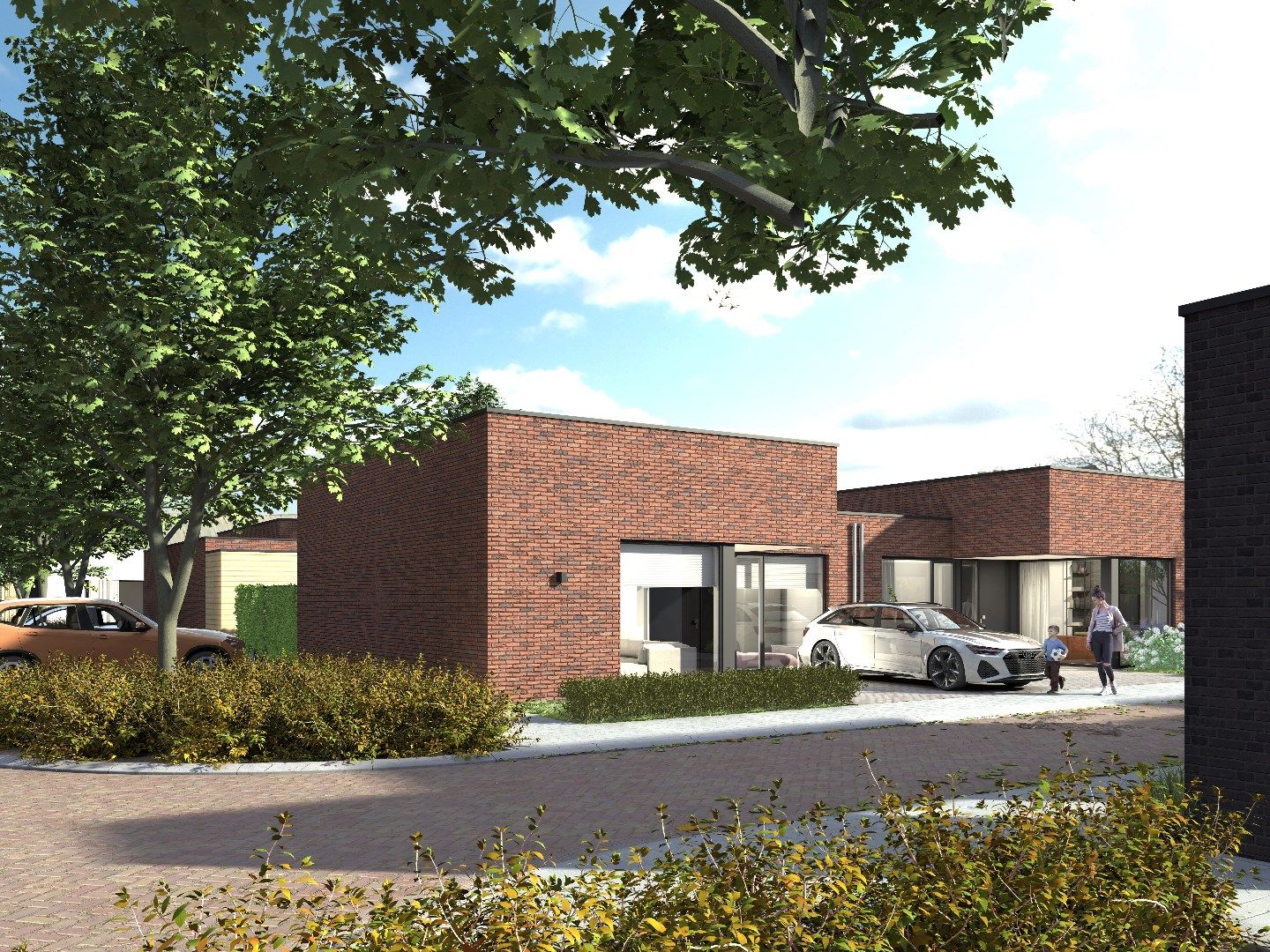
For the residential streets within De Fuus, the design prioritizes clarity and tranquility. The streetscapes have been planned to create an intuitive and peaceful environment for residents. Parking has been integrated into the overall design in a manner that maintains spatial openness while keeping vehicles readily accessible. This approach means that parking spaces are distributed strategically throughout the neighborhood, positioned close enough to residences for convenience while being arranged so as not to dominate the visual landscape.
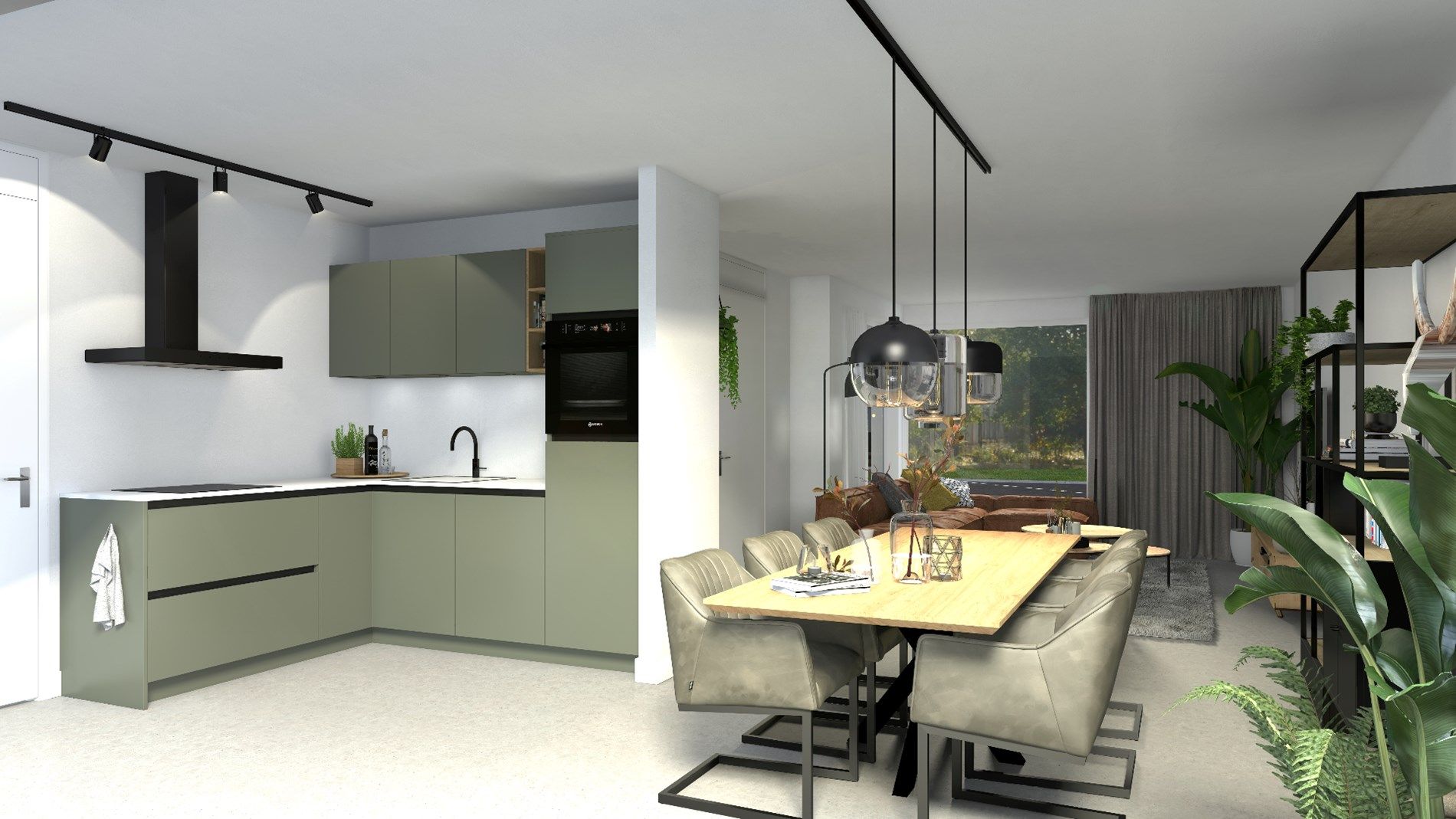
The outdoor spaces associated with the homes in De Fuus have been designed with attention to both functionality and aesthetics. The gardens provide areas for outdoor relaxation and social gatherings. Landscaping elements including carefully positioned trees and green strips contribute to the fresh and vibrant atmosphere of the neighborhood. The northern boundary of the development, where residential gardens adjoin existing homes along the Koninginnelaan, creates a natural transition zone that enhances privacy and quiet for residents.
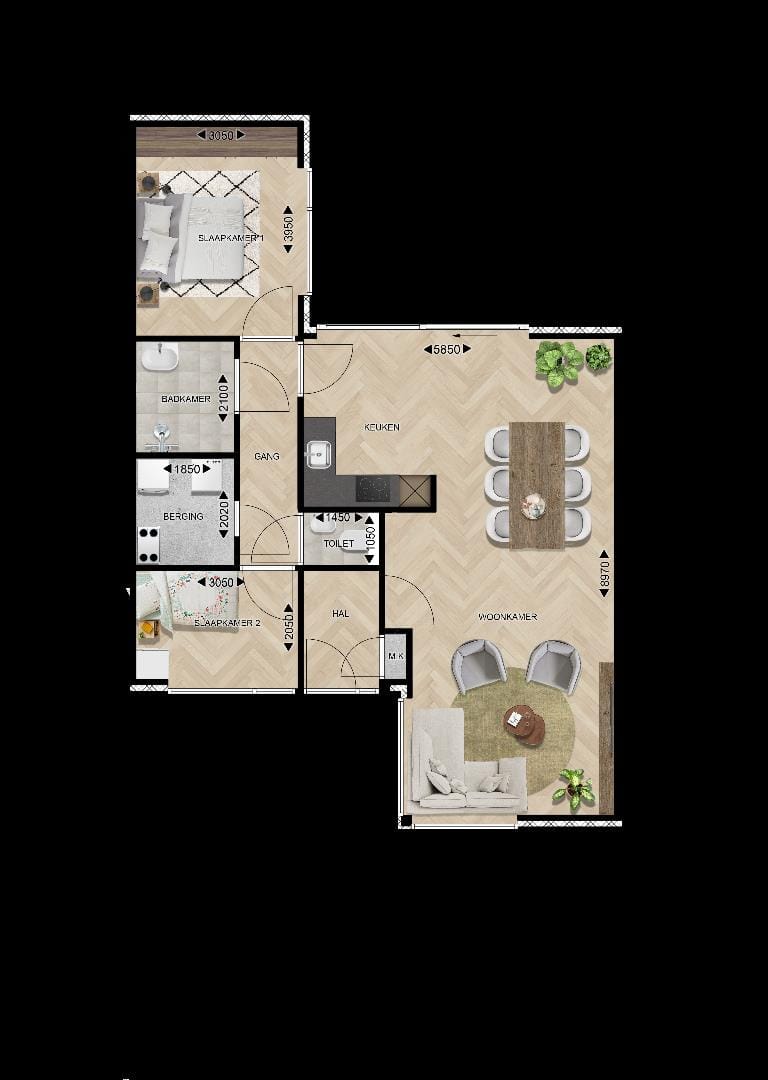
The specific terraced house being offered features a total living area of 78 square meters. Additionally, there is an external storage space measuring 5 square meters. The property occupies a plot of 171 square meters. The total internal volume of the residence is 156 cubic meters.
The layout consists of three rooms in total, with two of these rooms designated as bedrooms. The property has a single living floor, indicating a single-story configuration. This aspect aligns with the life-cycle friendly design philosophy of the De Fuus development, which aims to accommodate residents through various stages of life without the need to navigate stairs between different levels.
The roof of the property is a flat roof design, consistent with contemporary architectural approaches in new residential developments.
Energy efficiency is a notable feature of this property, which has received an A+++ energy label, the highest rating available in the Dutch energy labeling system. This classification reflects the property's exceptional thermal performance and low energy consumption. The building incorporates HR-glass, which is high-efficiency insulating glazing that significantly reduces heat loss through windows. The property has been fully insulated, with insulation measures applied comprehensively throughout the structure to minimize thermal bridging and heat transfer.
Heating is provided by a heat pump system, which represents a departure from traditional gas-fired heating and aligns with sustainability objectives in new construction. Heat pumps extract thermal energy from the external environment and transfer it to the interior heating system, operating on electricity rather than combustible fuel. This technology is consistent with the energy efficiency profile indicated by the A+++ label and with broader trends in residential construction toward reduced carbon emissions.
The property is offered at a price of 409,000 euros, with the designation vrij op naam indicating that transfer taxes and other transaction costs are included in this price. The price per square meter of living space calculates to approximately 5,244 euros.
The property is situated on a quiet road within a residential neighborhood, as indicated in the listing characteristics. This location within the Roermondse Veld area of Roermond places it within a suburban residential context.
Transfer of the property is available by mutual agreement regarding timing, providing some flexibility in the completion date. The property has full freehold ownership status, known as volle eigendom in Dutch property law, meaning the buyer would acquire complete ownership of both the building and the land on which it stands.
The cadastral designation for the property is ROERMOND B 5413, with the plot area confirmed at 171 square meters.
As a new construction project with a 2026 completion date, this property represents a purchase commitment for housing that will become available in the future. The listing status indicates the property is currently available for reservation or purchase, though occupation would not be possible until construction is completed.
The development's name, De Fuus, and its location within Roermond place it within the broader urban context of this Limburg city. Roermond serves as a regional center in the southern Netherlands, known for its historic city center and retail offerings. The Roermondse Veld area represents one of the city's residential districts, positioned outside the historic core.
The concept of life-cycle friendly housing, as described for De Fuus, refers to residential design that accommodates residents' changing needs over time without requiring them to move to different types of housing. This typically includes features such as single-level living, accessible doorways, and bathroom facilities designed for ease of use. The single-floor configuration of this particular property aligns with these principles.
The integration of different housing types within De Fuus, including detached homes, semi-detached homes, terraced homes, and apartments, creates a diverse residential community. This variety allows the development to serve different household sizes, compositions, and preferences. The specific property offered here is one of the terraced homes within this mix.
The proximity to existing development along the Koninginnelaan, as mentioned in the listing, indicates that De Fuus is an extension of established residential areas rather than an isolated new development. This connectivity to existing neighborhoods can provide residents with immediate access to established amenities, services, and community resources.
The design emphasis on maintaining spatial openness despite the inclusion of parking infrastructure reflects contemporary urban planning principles that seek to balance the practical requirements of car ownership with the creation of pedestrian-friendly and visually appealing residential environments.
The conversion of former Campina factory offices into residential apartments demonstrates an approach to development that incorporates existing structures rather than proceeding solely with new construction. The Campina company was a significant dairy cooperative with historical presence in various Dutch cities, and the adaptation of its former facilities represents a form of industrial heritage preservation integrated with new residential development.