Iconic 1869 Monument City Villa in The Hague Voorhout
Key Features
Description
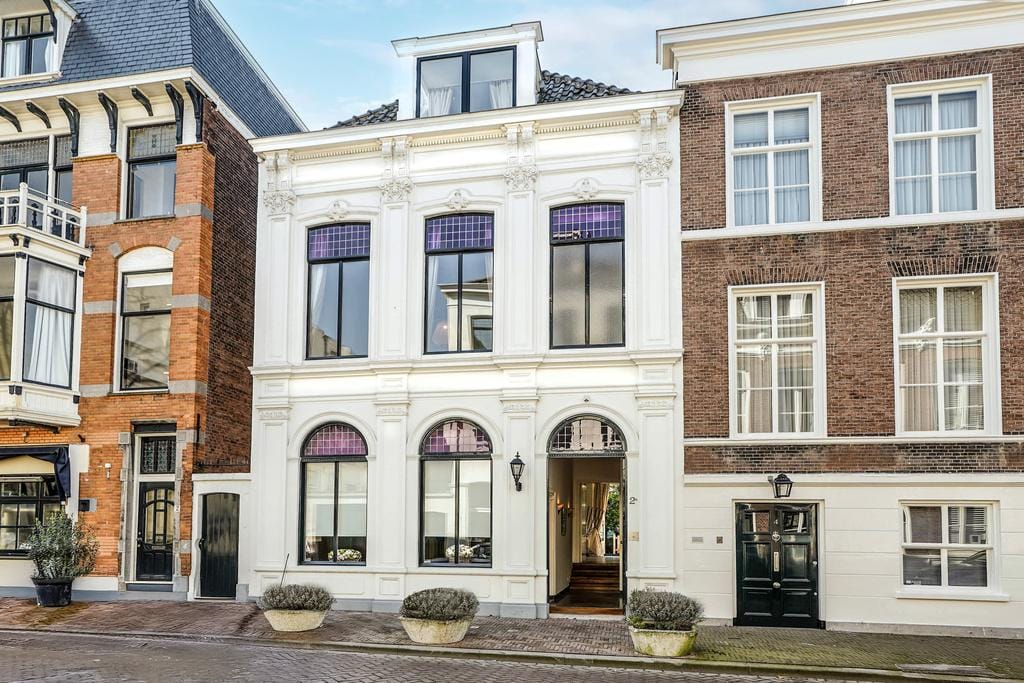
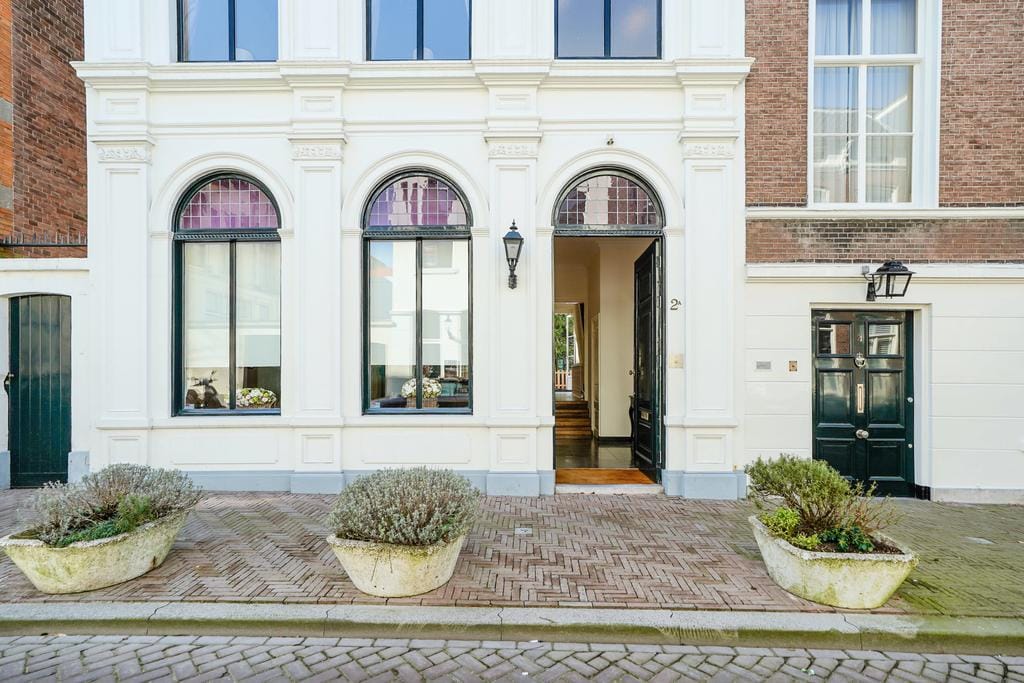
The property at Nieuwe Schoolstraat 2-A is a municipal monument dating back to 1869, located in the prestigious Voorhout district of The Hague. This semi-detached city villa features an eclectic-style facade that stands out as a unique design in the neighborhood. The building represents a piece of history in the center of The Hague while offering modern living comfort.
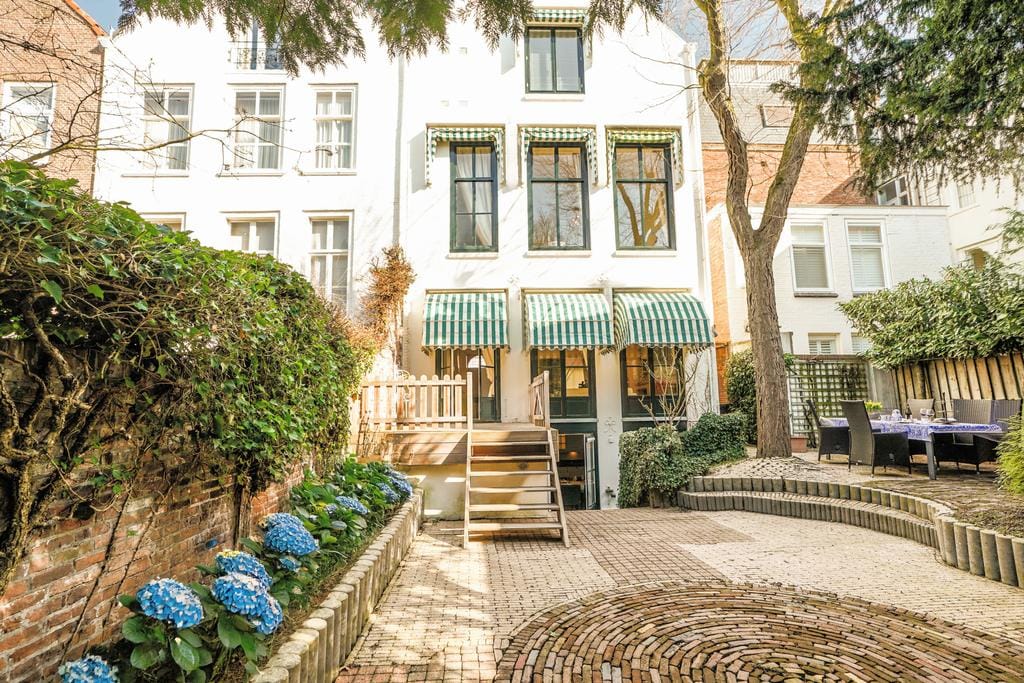
The living area measures 267 square meters, complemented by 8 square meters of additional indoor space and 11 square meters of building-bound outdoor space. The total volume of the property is 1,044 cubic meters. The plot covers 228 square meters, with a rear garden extending 14.77 meters in depth and 10.79 meters in width, totaling 159 square meters. The garden faces southwest, providing optimal sunlight throughout the day while maintaining privacy through its depth and positioning.
The interior layout spans five living levels and comprises seven rooms, including five bedrooms. The property features two bathrooms and two separate toilets. The bathrooms are equipped with double vanities, two walk-in showers, a bathtub, two vanity units, and a toilet. Additional amenities include an alarm system, outdoor blinds, and TV cable connections.
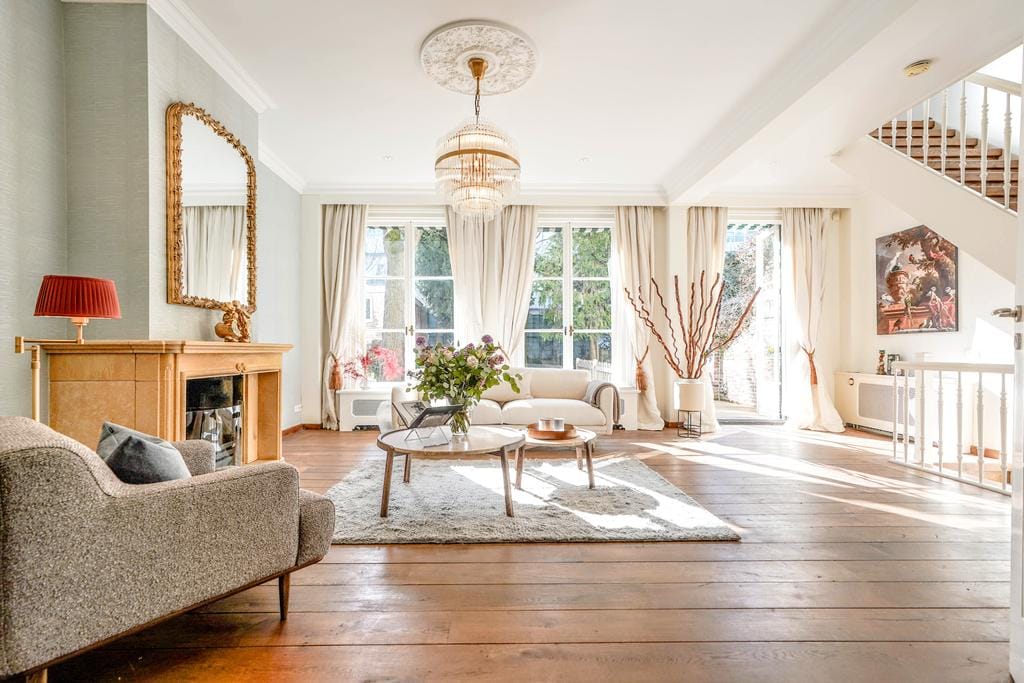
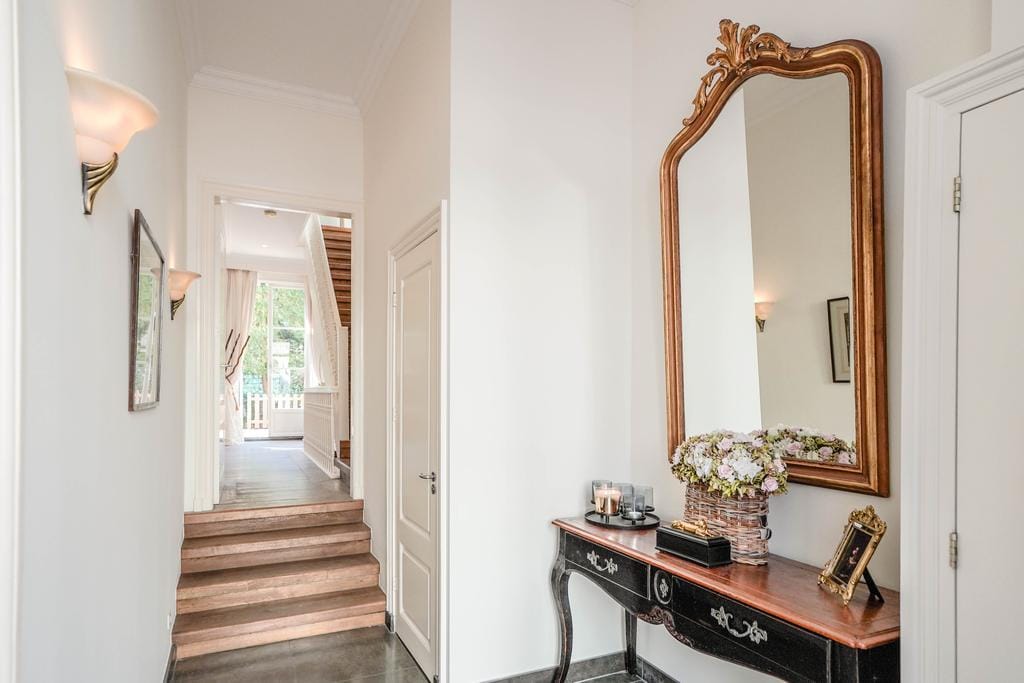
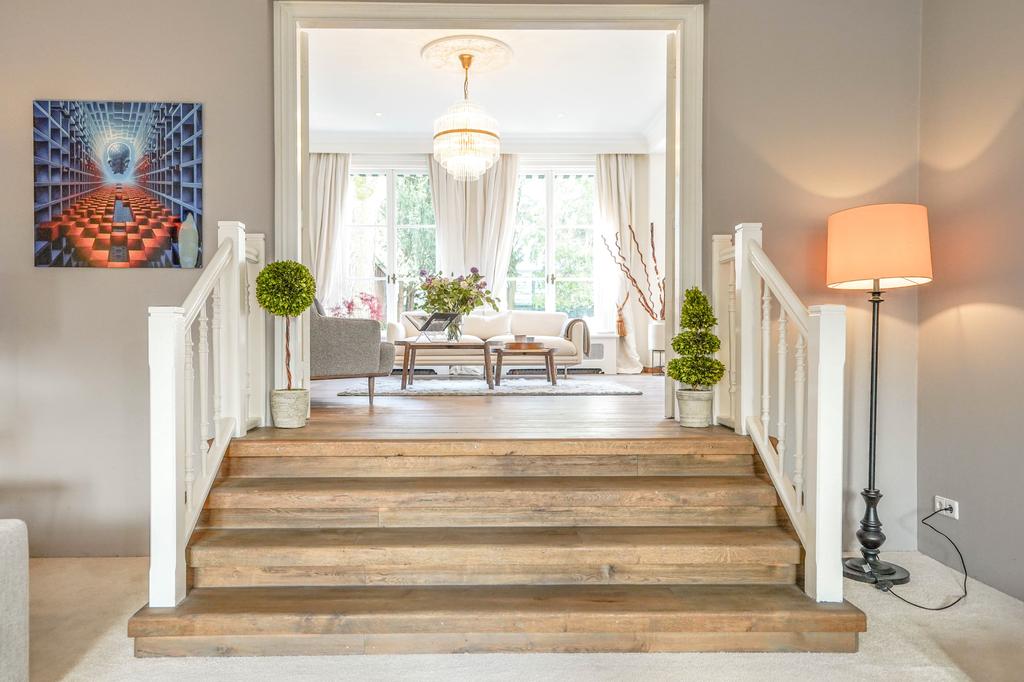
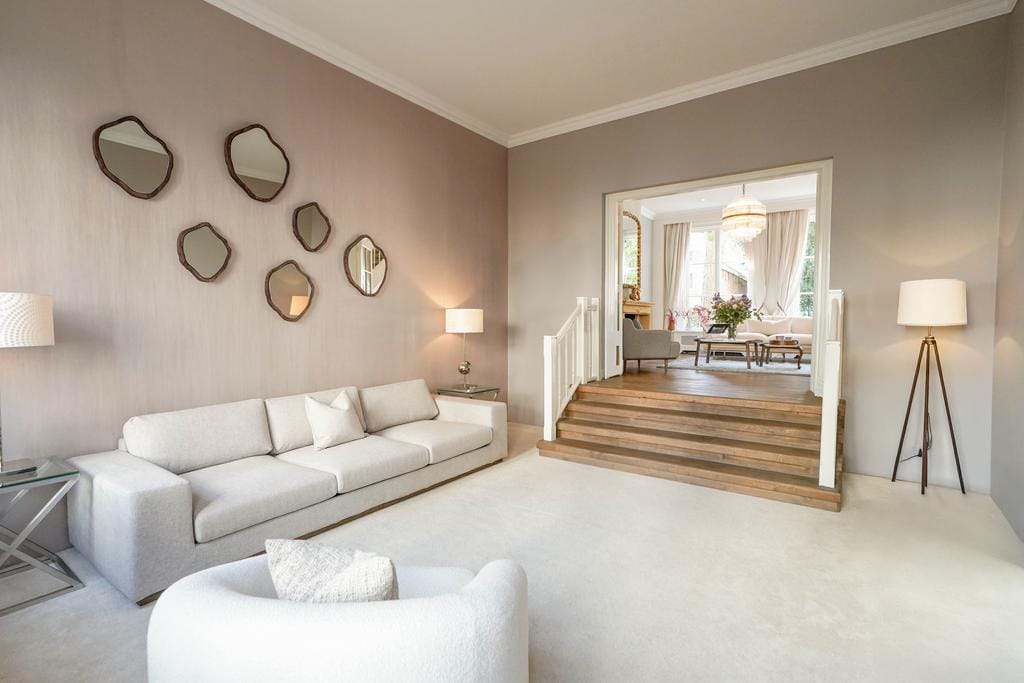
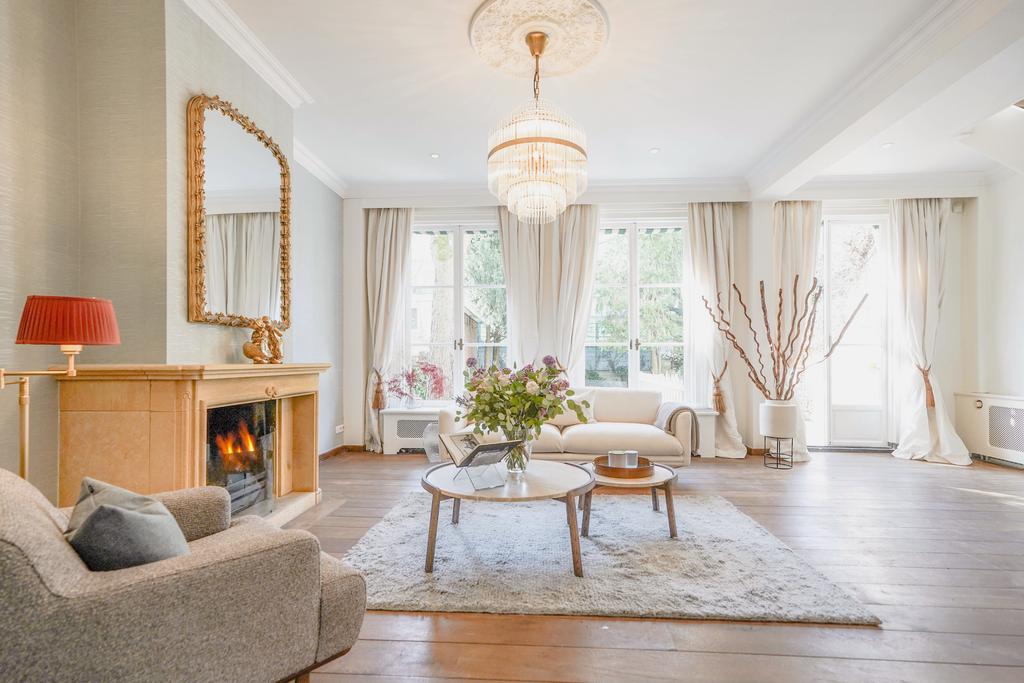
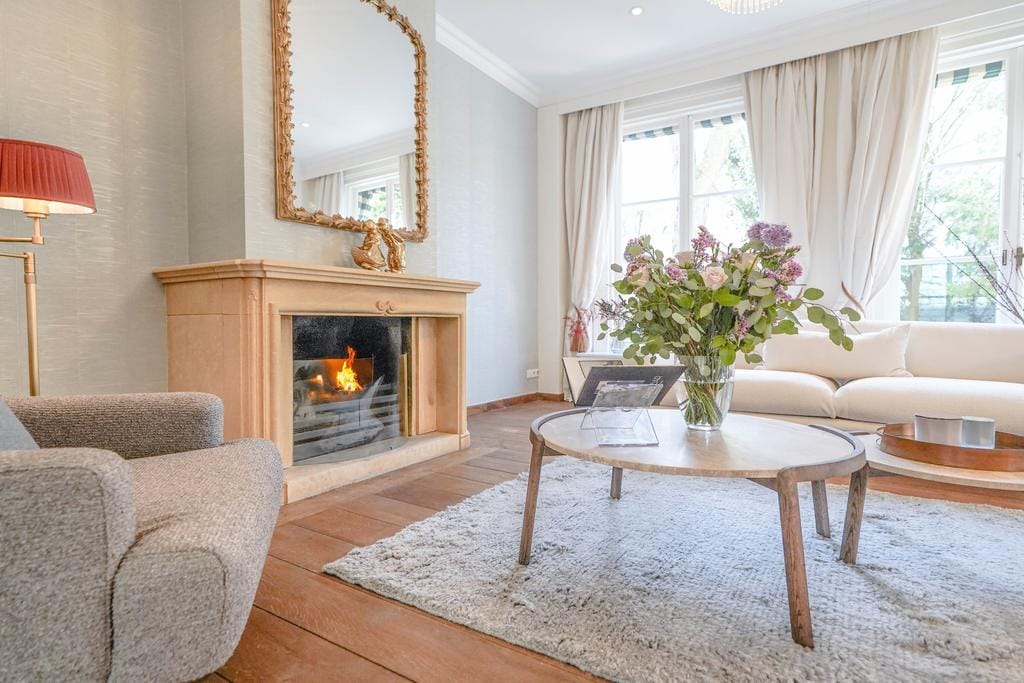
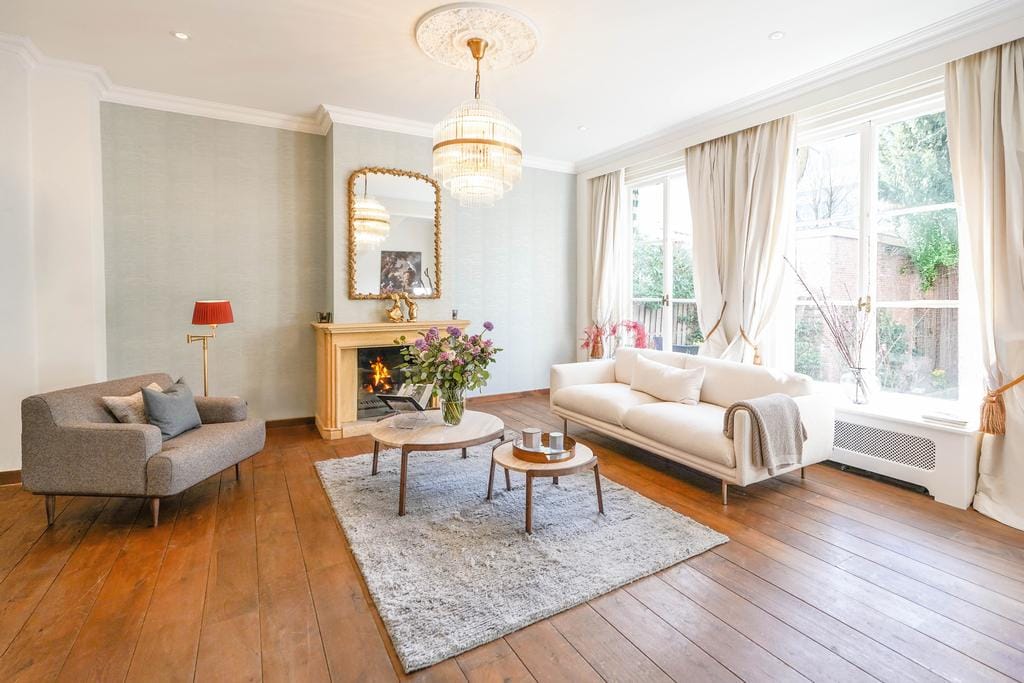
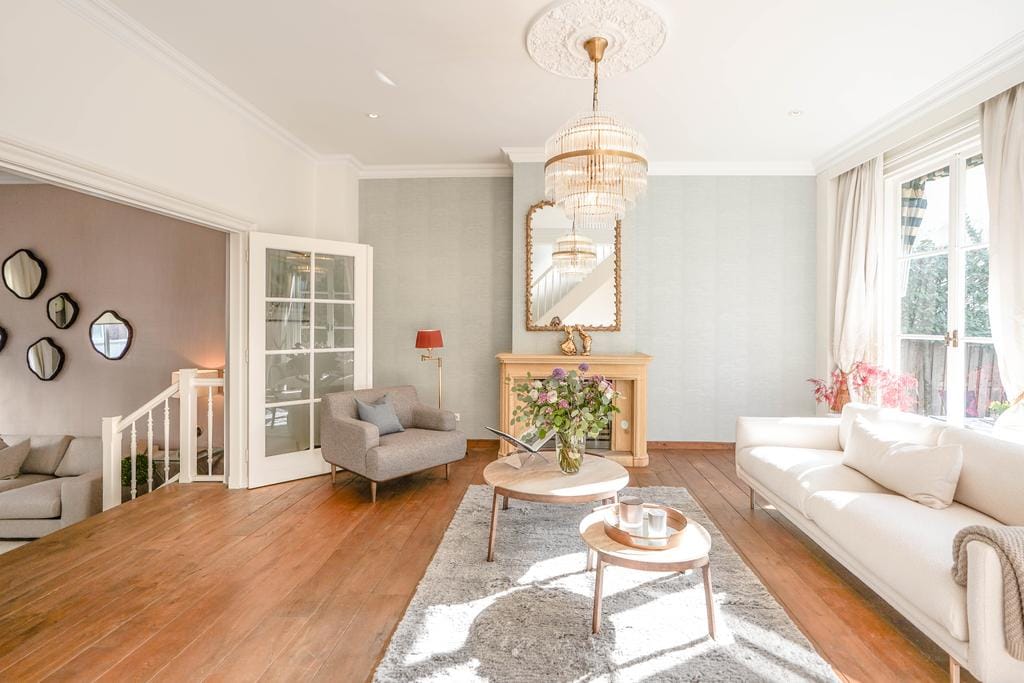
The entrance hall immediately conveys the grandeur of the property through its high ceilings and preserved original architectural details. The living and dining room is designed in an ensuite configuration, featuring parquet flooring, a classic fireplace, and ornamental ceiling details that reflect the building's historical character. The living room offers views of the rear garden, creating a connection between the interior spaces and the outdoor area.
The modern kitchen is designed as a living kitchen with extensive cabinetry and a spacious layout. From the kitchen, access is provided to a large basement that offers various possibilities, including use as a wine cellar.
The five bedrooms are distributed across the upper levels, each designed to provide privacy and comfort. The two bathrooms are finished with high-quality materials, and the separate toilets add convenience for residents and guests.
The property is classified as a protected city or village view and carries monument status. The building dates from before 1906, specifically 1869, and is categorized as existing construction. The facade style is eclectic, representing a period when architects combined elements from various historical styles.
In terms of energy efficiency, the property is exempt from the energy label requirement due to its monument status. The windows feature double glazing. Heating and hot water are provided by a gas-fired combination boiler that is owned by the property owner.
The location in the Voorhout district is described as one of the most sought-after areas in The Hague. The city center with its restaurants, boutiques, and cafes is within walking distance. Cultural attractions including the Mauritshuis museum, the Royal Palace, and the Hofvijver pond are nearby. Highway access via the A12, A4, and A44 allows for convenient travel to other destinations while maintaining proximity to the city center.
Parking is available through public on-street parking with permit requirements. The property includes an enclosed side entrance that provides practical access for bicycles or garden maintenance.
A structural inspection report is available, indicating that the property is in excellent condition. The transfer can include furnishings if desired, allowing for immediate occupancy. Delivery timing is subject to mutual agreement, with quick delivery being possible.
The asking price is 2,499,000 euros, which translates to approximately 9,360 euros per square meter of living space. The property is offered with a cost buyer arrangement, meaning the buyer is responsible for transfer taxes and notary fees.
The property type is classified as a mansion and corner house, with semi-detached characteristics. The ownership situation is full ownership, and the property is registered in the land registry under The Hague E 3503.
The Voorhout district where this property is located has a long-standing reputation as one of the most prestigious residential areas in The Hague. The neighborhood is characterized by its historic architecture, tree-lined streets, and proximity to both cultural institutions and practical amenities. Residents of this area benefit from the walkability of the neighborhood, with daily necessities and leisure options accessible without the need for a car.
The building's construction in 1869 places it in a period of significant urban development in The Hague. During this era, the city was expanding beyond its traditional boundaries, and the Voorhout area was developed as a desirable residential quarter. The eclectic architectural style of the facade reflects the design preferences of the late nineteenth century, when architects drew inspiration from various historical periods to create distinctive buildings.
The semi-detached nature of the villa means it shares one wall with an adjacent property while maintaining independence on the other sides. This configuration provides a balance between the privacy typically associated with detached houses and the urban density that characterizes city center locations.
The garden dimensions create a rectangular outdoor space that is unusual for properties in central urban locations. The southwest orientation ensures that the garden receives afternoon and evening sun, making it suitable for outdoor dining and relaxation during warmer months. The depth of the garden provides a degree of privacy that is not commonly found in city center properties.
The five living levels suggest a traditional layout with a ground floor for reception rooms, upper floors for bedrooms, and possibly attic space converted to additional living areas. This vertical distribution of space was typical for grand urban residences of the nineteenth century and allows for clear separation between public and private zones within the house.
The presence of a basement adds valuable storage or utility space. In properties of this type and age, basements were originally used for coal storage and domestic service areas. The mention of wine cellar possibilities indicates that the space has appropriate conditions for storage of temperature-sensitive items.
The building inspection that has been conducted provides prospective buyers with documented information about the structural condition of the property. This is particularly important for buildings of this age, where hidden defects in foundations, roof structures, or damp proofing can represent significant future costs. The statement that the property is in excellent condition suggests that major renovation work is not anticipated.
The option for furnished transfer is relevant for international buyers or those who wish to minimize the logistics of moving. This arrangement means that the existing furniture, fixtures, and fittings can be included in the sale, allowing for immediate occupancy without the need to source and install new items.
The property's classification as both a monument and part of a protected city view imposes certain restrictions on modifications that can be made to the exterior. Any changes to the facade, windows, or roofline would require approval from the heritage authorities. This regulatory framework helps preserve the character of the neighborhood but limits the owner's ability to make exterior alterations.
For heating, the gas combination boiler represents a relatively modern installation in a building of this age. The exemption from energy labeling requirements means that prospective buyers cannot rely on a standard energy performance certificate to assess the thermal efficiency of the property. However, the presence of double glazing throughout indicates that some investment has been made in improving the thermal envelope.
The asking price positions this property at the premium end of the The Hague residential market. The price per square meter reflects both the location in the prestigious Voorhout district and the historical significance of the building. Monument properties often command a premium due to their uniqueness and the restrictions on new construction in protected areas.
The availability for viewing seven days per week indicates that the seller is motivated to achieve a sale. The property is available immediately upon agreement between parties.