Historic T-Farm Brouwershof with Business Destination and Future Residential Potential in Maasbommel
Key Features
Description
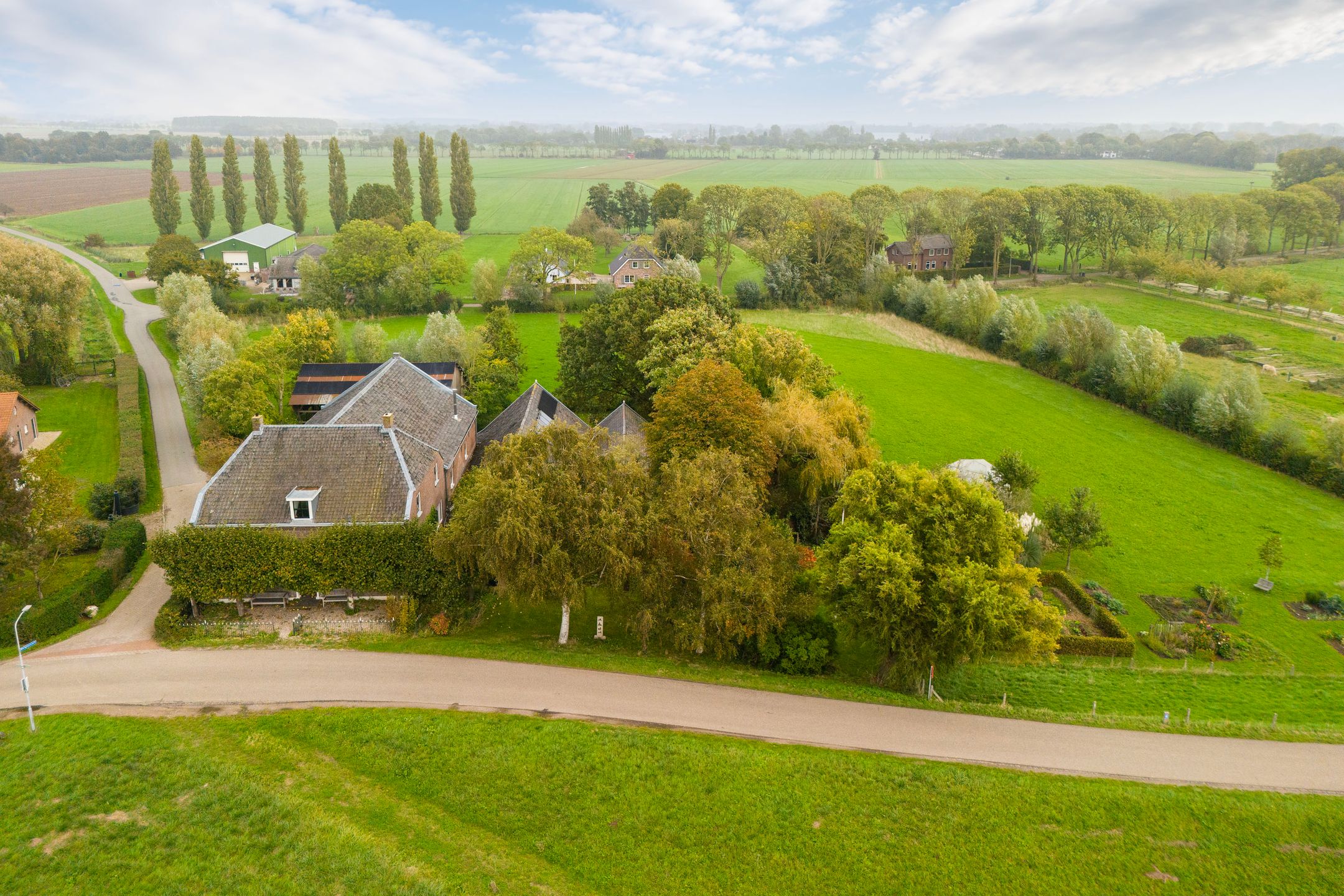
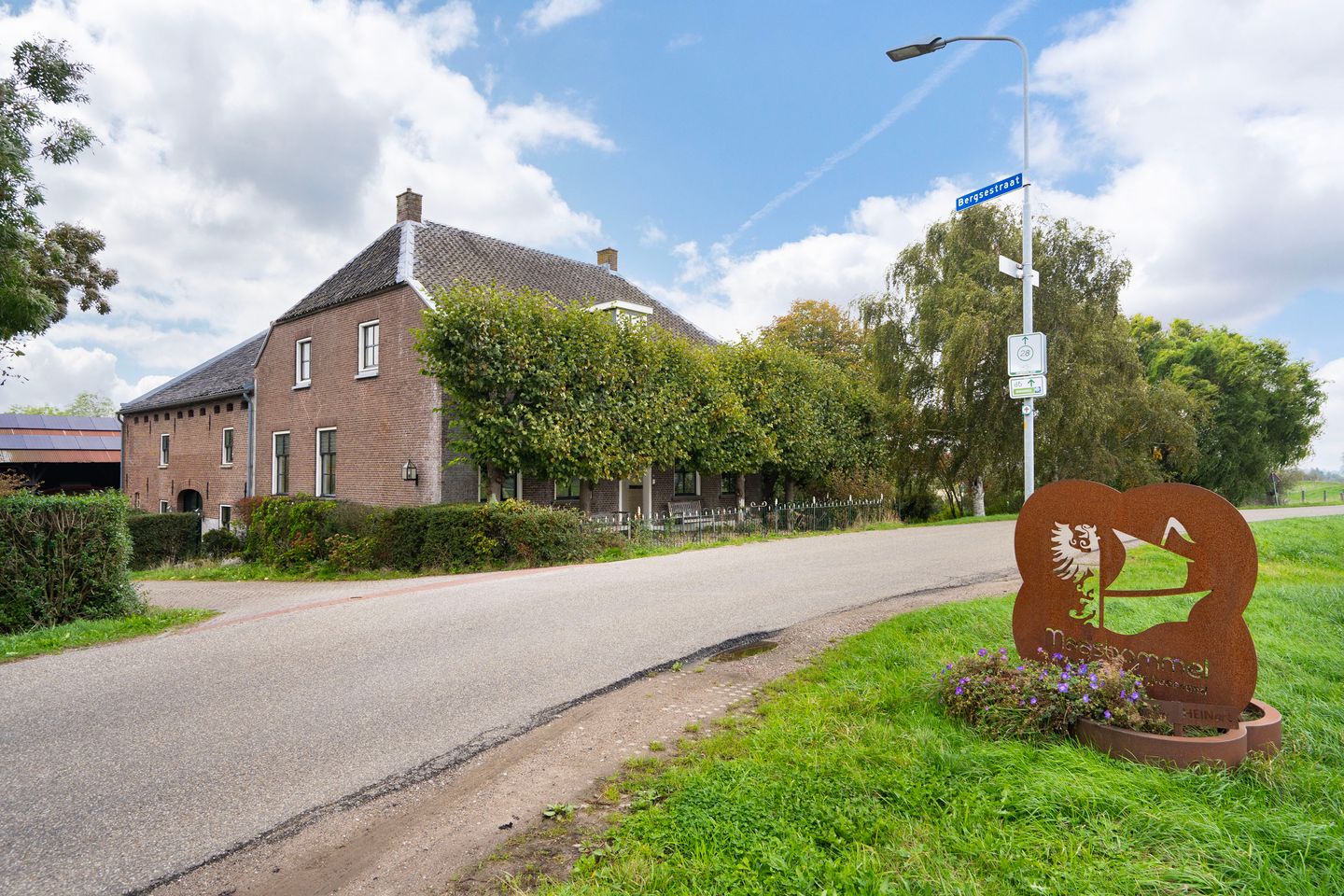
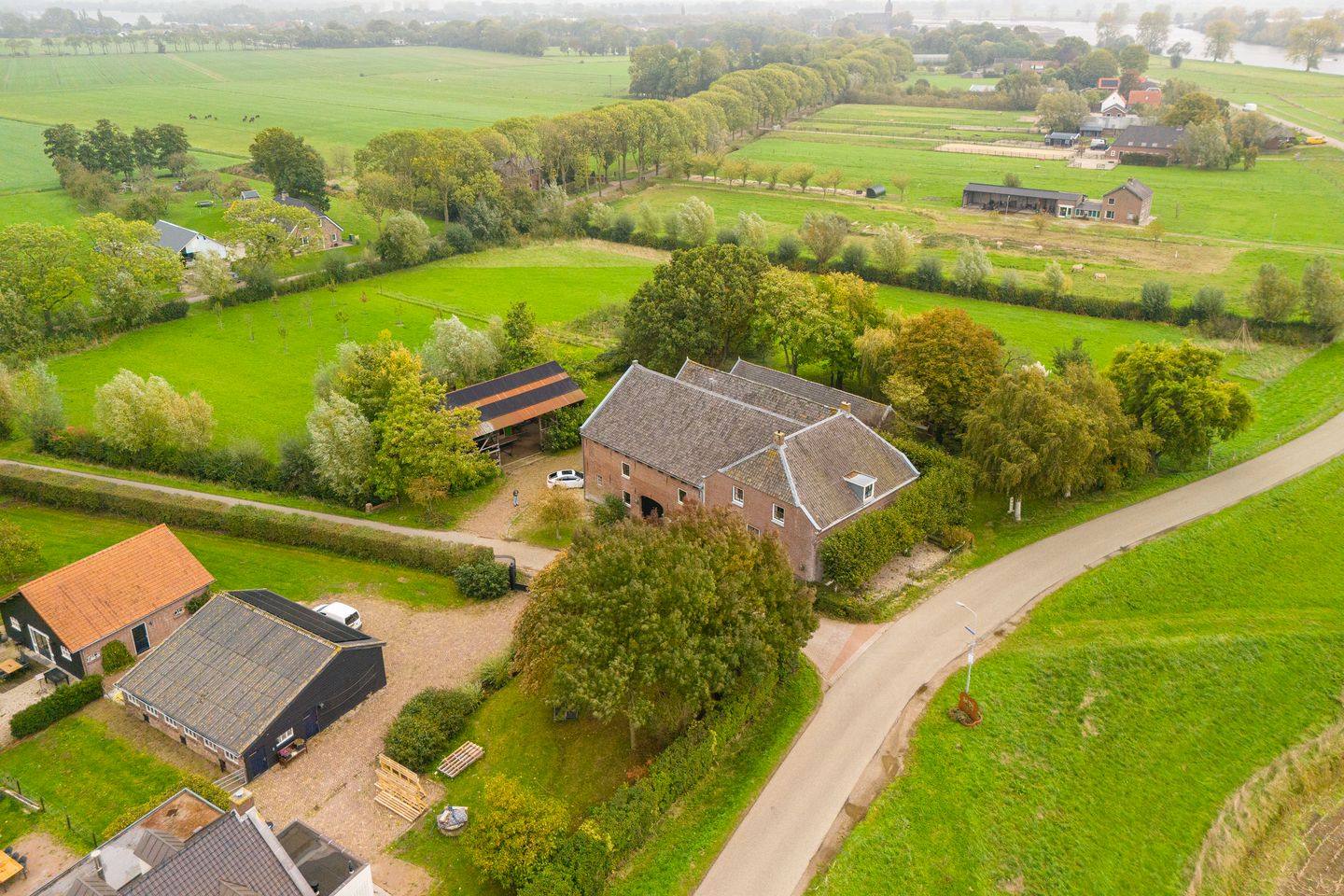
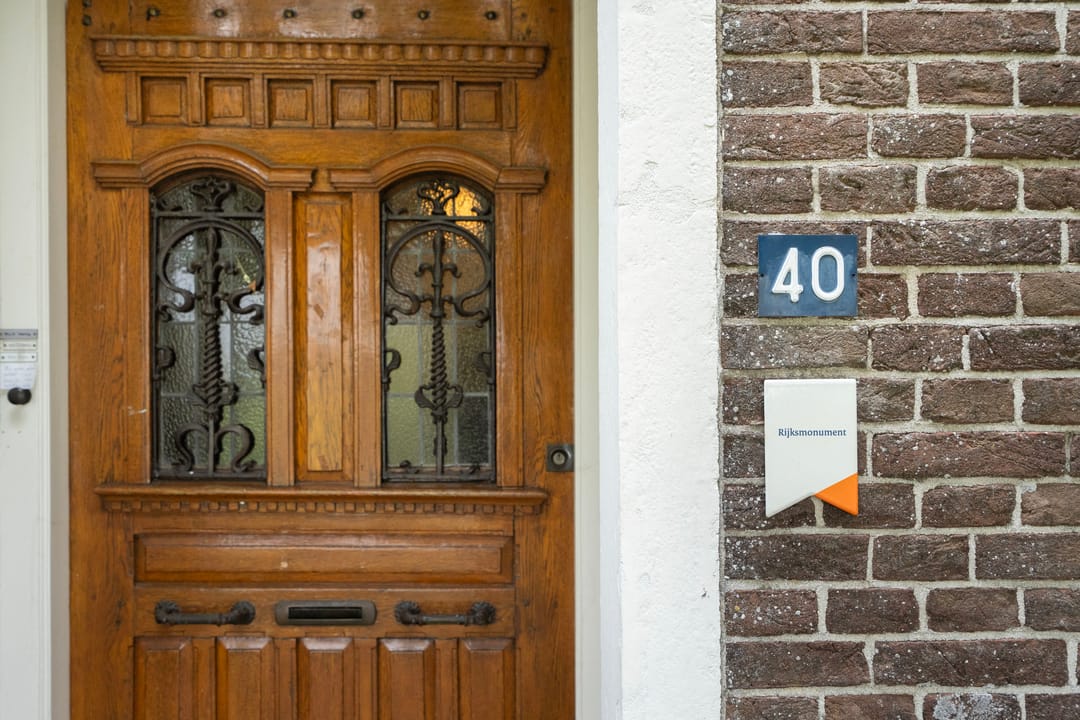
Brouwershof is a national monument T-farm located on the inland dike of Maasbommel, in the river region of Gelderland. The property dates back to 1870 when Ivo van Koolwijk built the residence that gave the farm its characteristic T-shape: the house positioned perpendicular to the dike and the rear section extending along the courtyard. The initials above the cellar door serve as a reminder of the construction year. After Van Koolwijk passed away in 1878, Brouwershof was sold and received its agricultural designation shortly thereafter. In 2001, the property was designated as a national monument as a representative example of nineteenth-century architecture on the Maas river bank, showcasing a typical combination of solid construction, precise proportions, and regional detailing.
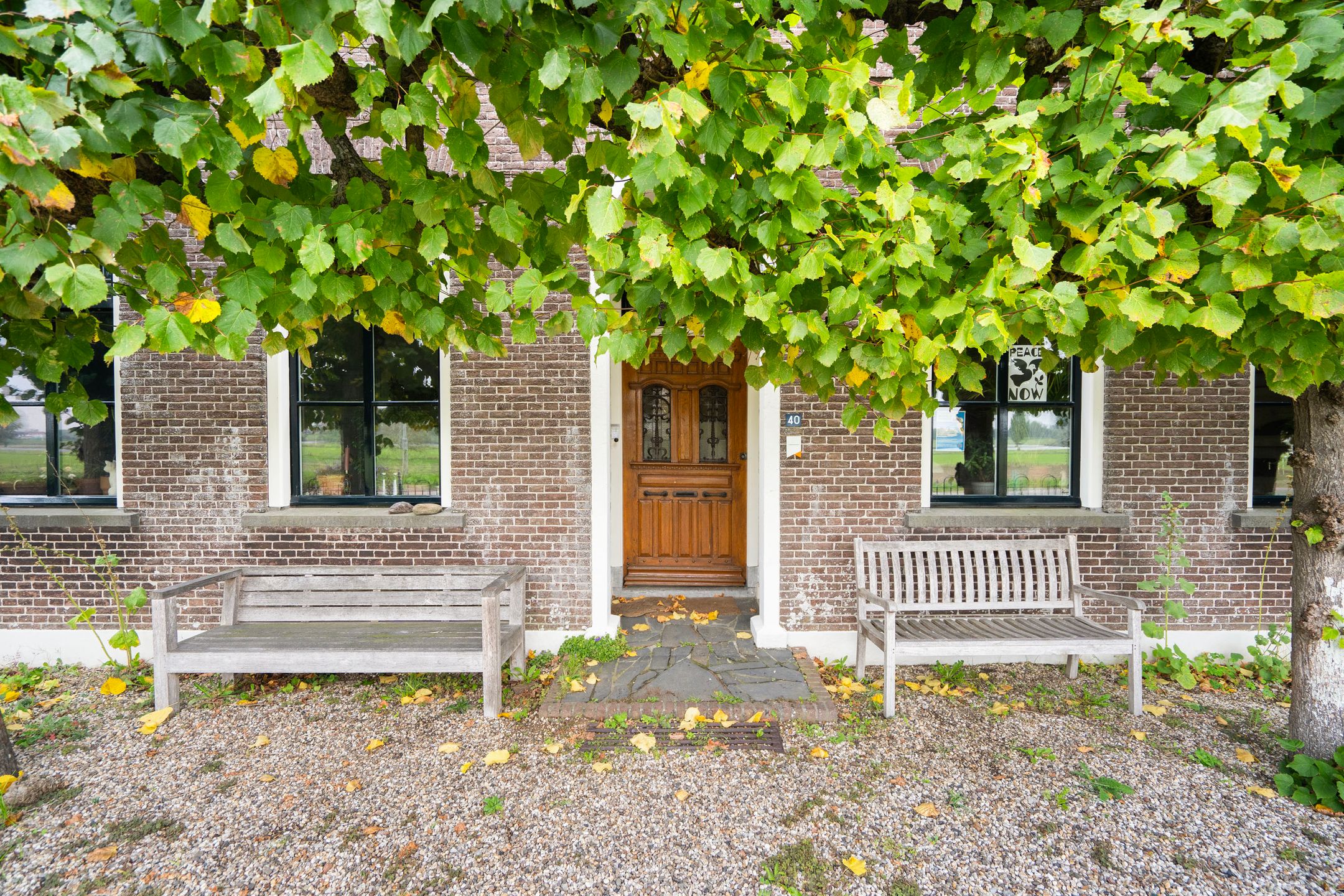
The property has a history as a brewery before transitioning to agricultural use. Behind the symmetrical facade with five window bays and traditional Dutch tiles lies a carefully preserved whole that conveys its significance through proportion and tranquility rather than ostentation. Since 2020, the entire estate has been systematically restored, made sustainable, and refined while retaining elements of value and adding what the future requires.
The entrance hall features an authentic bluestone floor, wainscoting, and pine paneled doors forming the central axis of the front house. The current layout accommodates two households on the ground floor. On the left side lies a living room with a small room behind it and, in extension, a guest room with its own bathroom including toilet, shower, and sink. On the right side of the hallway is a spacious living room connected to the communal kitchen.
All rooms have high ceilings and wide floorboards. Both living rooms contain a fireplace. The windows with six-pane divisions and stained glass upper lights capture the light from the river on the front side. The rooms on the dike side are simple yet atmospheric, with an unobstructed view over the Maas floodplains. This layout enables ground-floor living without compromising the spatial quality of the whole.
The kitchen on the right side serves as the daily working kitchen of the house. From the window, there is a view of the vegetable garden. Adjacent to it, half a level lower, is the utility room with toilet and access to the side garden. From here, a staircase leads to one of the cellars and provides access to the large kitchen and the rear section.
Beneath the front house lie two vaulted cellars with a combined area of approximately 117 square meters. They are cool, dry, and excellently suited for storage, wine, or installations. The heating equipment, solar boiler, and laundry room are located here. The brick vaults have been preserved and still reference the brewery past of the building. The foundation is in stable condition, and the cellar walls are dry with natural ventilation.
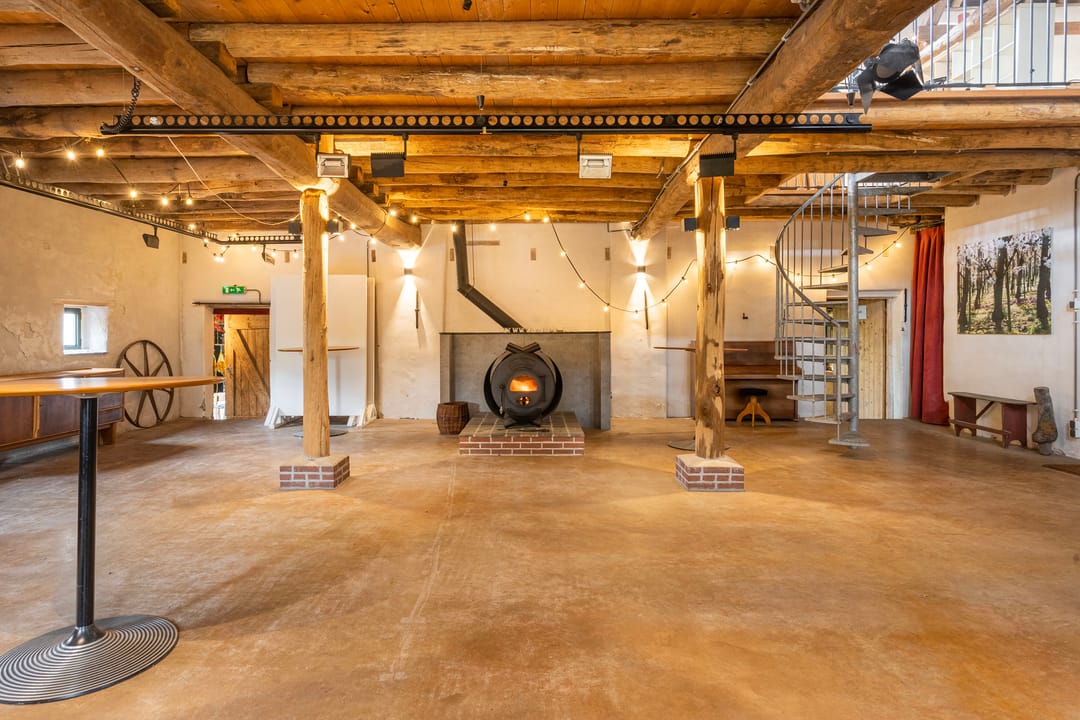
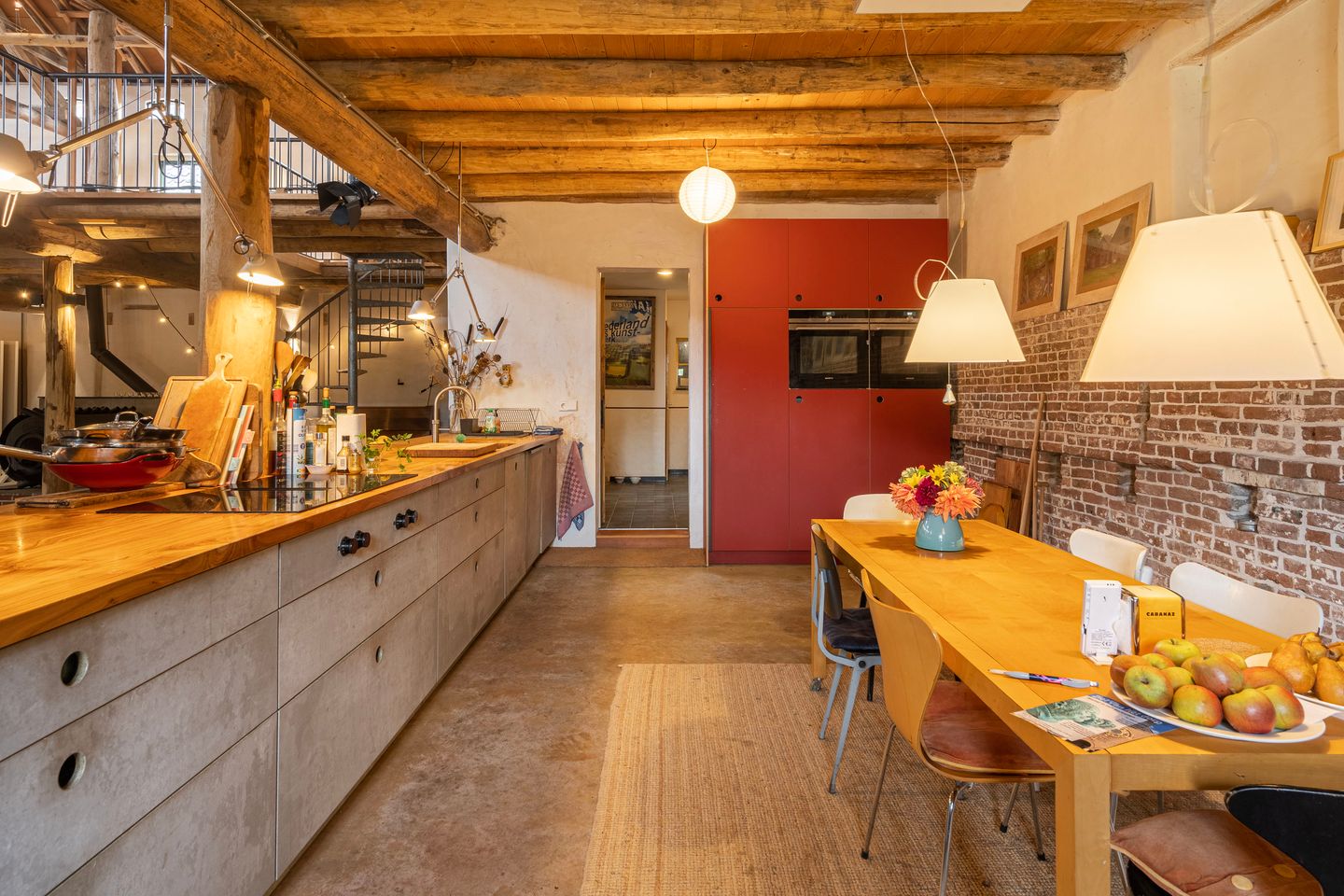
The rear section, where the brewery and later the barn were located, has an area of approximately 155 square meters on the ground floor and 155 square meters on the upper floor, the latter accessible via a spiral staircase. At the location of the void, the full space can be experienced as one large open area with a high roof and visible rafters. The insulated concrete floor on the ground floor is equipped with underfloor heating. Stable windows on the ground floor and the small windows around the former malt loft on the upper floor bring rhythm and light into the space. Two double doors open to the garden and courtyard, connecting indoors and outdoors in a natural way.
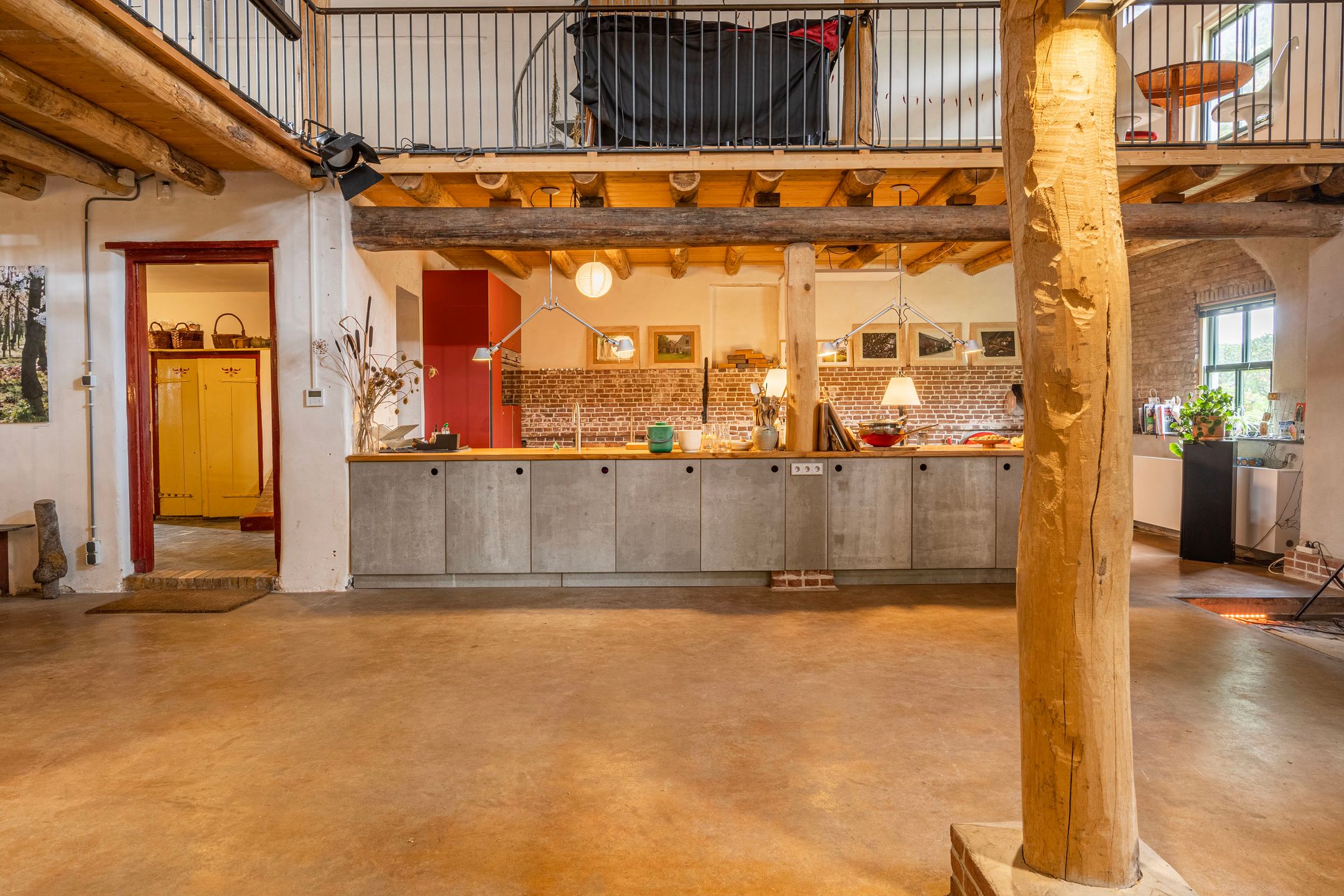
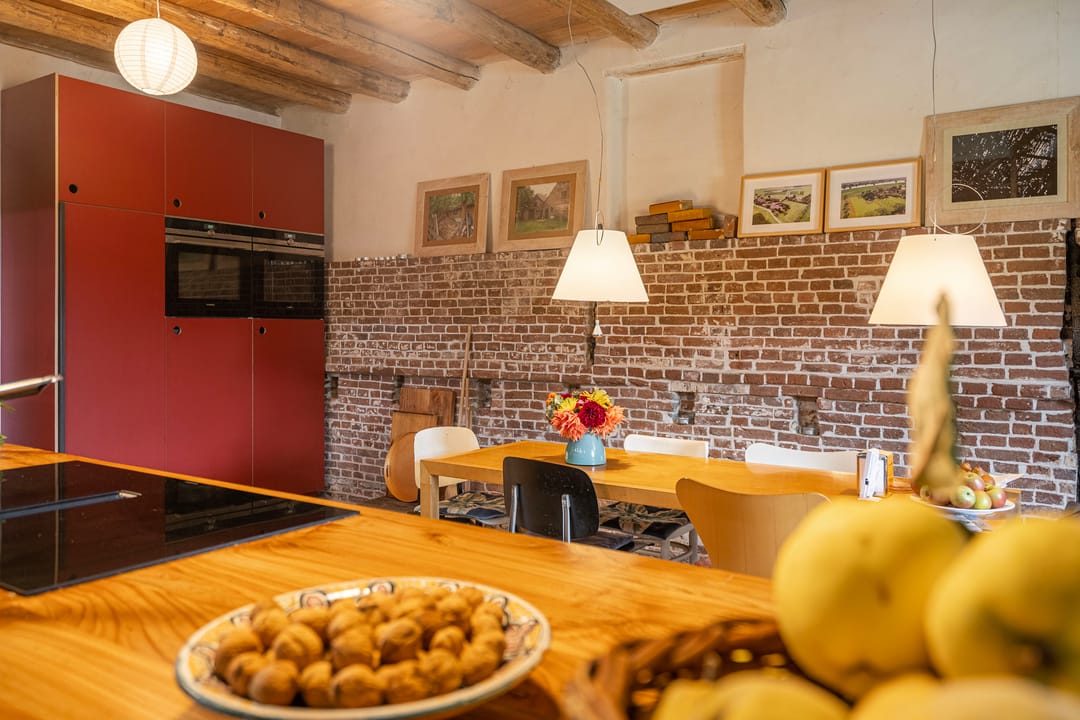
The barn is currently used as a multifunctional space for work, meetings, exhibitions, and receptions. The wooden ceiling and open roof structure give character, while amenities such as a pantry, infrared heating, and a wood stove provide comfort and convenience. The large kitchen has been crafted with artisanal execution, featuring a solid elm worktop 90 centimeters wide, base cabinets on two sides, Gaggenau appliances, induction cooktop, two ovens including a steam oven, Quooker, and a Liebherr refrigerator with double cooling zones.
A cast iron spiral staircase connects the hallway at the rear to the upper floor. The landing with void allows the roof structure to be fully experienced. On this floor, four spacious rooms are arranged around the large landing under the insulated roof. The visible rafters and purlins demonstrate the craftsmanship of the original construction. Two bathrooms, one with a bathtub and one with a shower, complete the upper floor. Each room has its own orientation: views over the river on the dike side, and views of the garden and courtyard on the courtyard side. Via the landing, the upper floor above the rear section is also accessible.
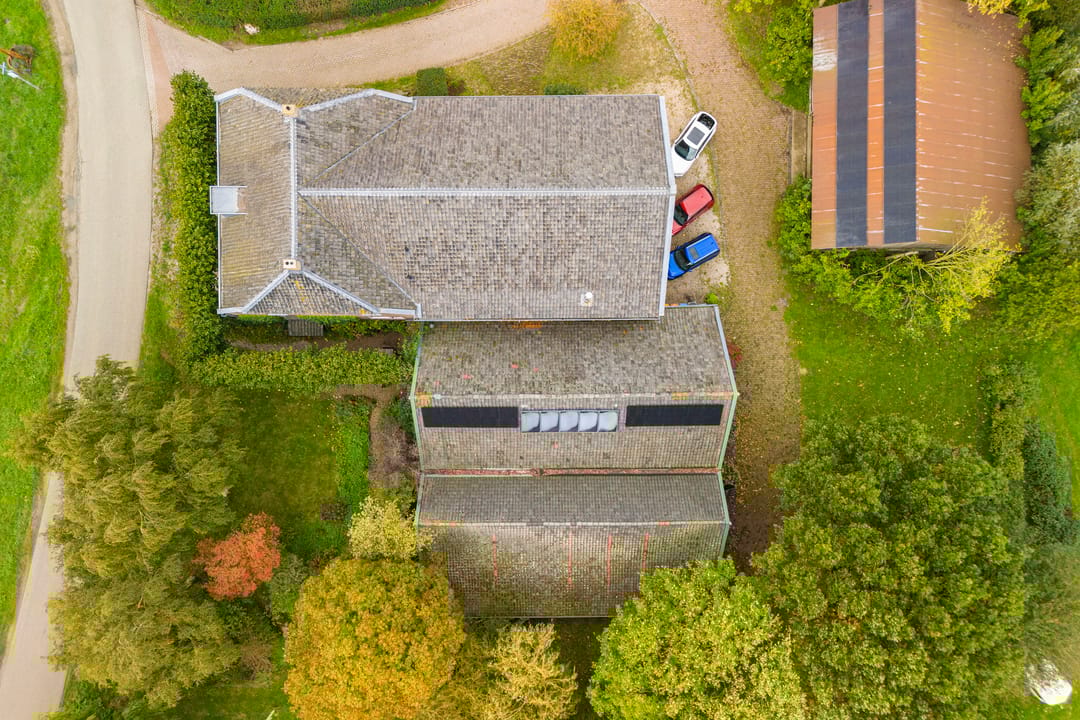
The sheds next to the rear section are solidly built and together amount to approximately 252 square meters. The first shed serves as a workshop with attic; the second as a garage. Both were painted on the exterior in 2024 and treated against woodworm in 2025 with a ten-year guarantee.
At the end of the courtyard stands the large barn. In 2023 and 2024, connections for water, electricity, sewage, and wifi were installed. The barn is prepared for bed and breakfast use, with shepherd's huts and a toilet trailer with two bathrooms. The solar panels, 26 on the large barn and 10 on the first shed, supply the energy for the entire complex.
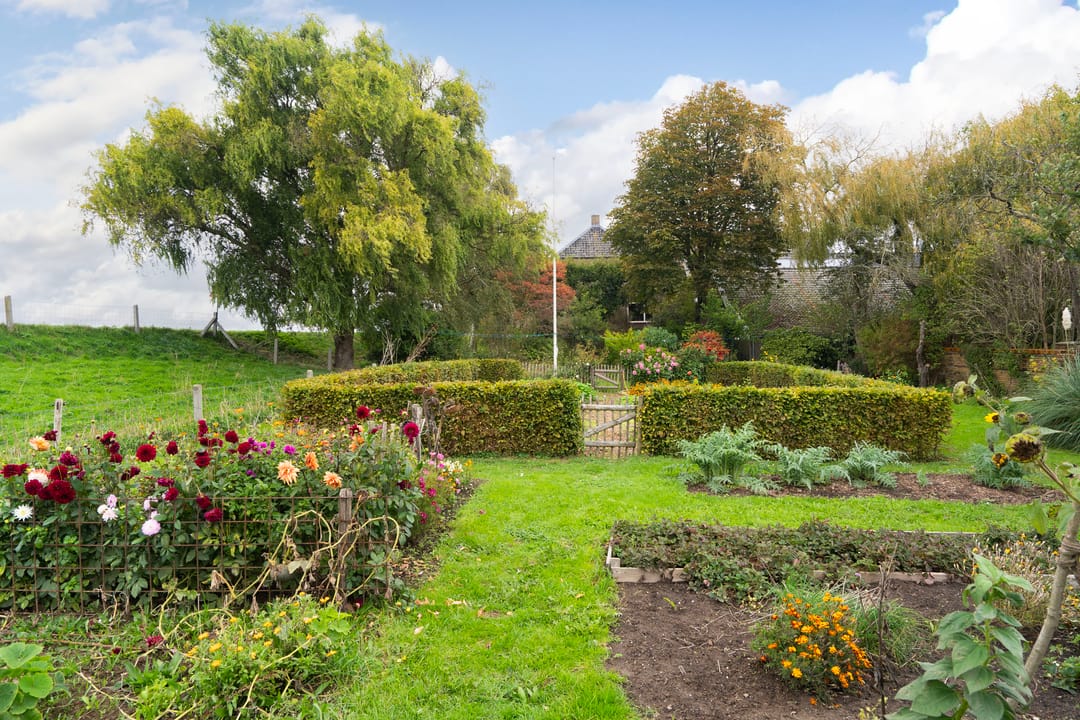
The courtyard of 13,060 square meters forms a cohesive landscape of garden, pasture, and vegetable garden. In 2021 and 2022, eighteen fruit trees and two walnut trees were planted with subsidies from Gelders Landschap. A hedge was planted around the vegetable garden, two bird groves were created, and in 2025 a Tiny Forest with pond was established, partially financed by the province of Gelderland.
The vegetable garden contains sixteen raised beds, expanded in 2023 and 2024. There is a greenhouse from 2022 with water supply from the courtyard. Old willows and pleached linden trees around the property have been preserved and pruned annually. The Maas hedges have been traditionally restored.
Brouwershof falls within the zoning plan Buitengebied Berghuizen 40 of the municipality of West Maas en Waal. The function has been changed from agricultural to Business with a company residence, fitting within environmental categories 1 and 2 according to the attached business activities list. The municipality granted this change specifically for a business focused on consultation, tranquility, reflection, and creative activities, with small-scale overnight accommodation for a maximum of ten people.
Within this designation, artisanal, artistic, and service-oriented activities are permitted, provided they are small-scale and without outdoor storage. The building of the national monument T-farm remains preserved. The outdoor space may be used for extensive recreation and light catering related to the use.
The municipality of West Maas en Waal encourages in its Environmental Vision the preservation and reuse of characteristic buildings in the countryside. Changing the function to residential is possible when the cultural-historical value is maintained. This policy line makes the modification of the business designation to residential concretely feasible, in line with provincial policy for the river region.
According to the inspection report of Monumentenwacht Gelderland from 2025, Brouwershof is in good condition. The structure is solid, the facades and window frames have been restored, and the roof is wind and watertight. Recommendations concern regular maintenance of joints, painting, and periodic inspection of rafters and gutters. Since 2021, the farm has been inspected every two years.
The sustainability has been integrally executed according to a plan by Thuisbaas from 2023. Brouwershof is completely gas-free, with two Panasonic Aquarea heat pumps of 16 kW each, connected to a solar boiler and 36 solar panels. The electrical system has been upgraded to 3x25 ampere. In 2023, secondary windows were placed at the stained glass windows in all living spaces downstairs. Window frames, ceilings, and floors have been insulated while preserving historical details. Exterior lighting, gutters, and painting have been renewed, and the courtyard has a Zappi charging station.
Between 2021 and 2025, the entire ensemble has been thoroughly restored: painting, woodworm treatment, new gutters, courtyard restoration, greenhouse construction, creation of Tiny Forest, and landscaping. Brouwershof is therefore in move-in ready condition without deferred maintenance.
The property is located on the inland dike of Maasbommel, municipality of West Maas en Waal, province of Gelderland. The location by the river and near the nature area De Gouden Ham provides tranquility and views. Nijmegen and s-Hertogenbosch are both approximately thirty minutes away by car via the A50 or A15.
The property has a living area of 363 square meters, additional indoor space of 272 square meters, and a volume of 2,295 cubic meters. There are four bedrooms, three bathrooms, and two separate toilets. The garage can accommodate three cars. The plot of 13,060 square meters is fully owned and features a garden all around. The property is situated on a quiet road, outside the built-up area, in a rural location with an unobstructed view.